The first time I saw them after I found out, they were sitting outside across the street at a restaurant in our neighborhood. One of the servers and member of their clique waved and greeted me with an ecstatic “hey Kellye!” I was visibly surprised and replied “oh hey,’ then sat down, opened my laptop and got to work. They saw me. I know they did. The one’s who didn’t speak.
Apparently, they had given me a reputation, the problem was that no one came to me or told me what I had done to earn it.
Just two days before, while enjoying a bottle of wine with a few acquaintances, a guy, someone who up until that point I would’ve considered a buddy, came to sit at the table with us to “chat.” Somewhere out of the blue, he began to harp about how women are mean and don’t support each other.
That’s when I happened to get up and excuse myself to go to the restroom.
While I was away, he told the five people sitting outside with me that I’m a “mean girl.” Like most toxic narratives, he couldn’t give a single example. He also said he liked me, so make that make sense.
As the story was later told to me, he had gotten into an argument with his friend (formerly mine), and she, along with others, had been coalescing around the idea that I’m nasty and rude, and that “everyone” agreed.
No one in that group of five agreed. They made it clear that this had not been their experience. Several even asked what I had done, and again, he had no answer.
All of this happened behind my back, while I was in the restroom. That was the part that hurt most.
I hadn’t done anything to him. He even admitted that he liked me, but still chose to participate in the smear campaign.
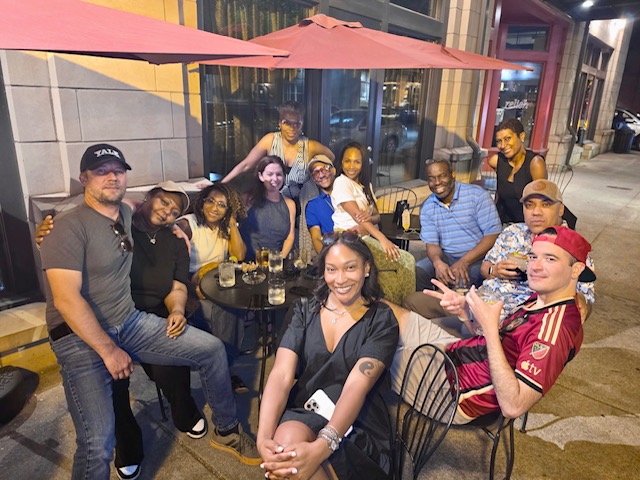
The Freudenshaden (heavy on the Shade):
There’s a particular kind of pain that comes from being handed a version of yourself that you don’t recognize and then being told that everyone already believes it.
The betrayal runs deep when someone attacks your character and reputation proactively. They could simply stop engaging with you. Instead, they choose to drag you through the mud – often for entertainment.
And what’s worse is that even people who don’t agree will often say nothing. Not because they believe it, but because no one wants to be next.
People create community around shared dislike. Sometimes, that’s all it takes to feel like you belong.
Who Starts Them
Smear campaigns rarely begin with truth, hey begin with insecurity, projection, or social leverage.
The people who start them don’t always target others because of what they’ve done. Often, they target people because of how they feel around them.
Why They Happen
1. Insecurity and Projection
When someone feels threatened by your confidence, your presence, your independence, or even your neutrality, they may project their own traits onto you.
Calling someone “mean” without evidence is often a reflection of how they feel about themselves, not you.
2. Social Currency and Group Bonding
Gossip has a dark kind of power: it builds quick alliances.
People bond faster over shared dislike than shared admiration. Being the person who “has the tea” gives someone instant relevance and attention.
3. Control and Narrative Ownership
If someone can define your reputation before you even have a voice in the room, they gain control of how others perceive you.
This is especially common in environments where social hierarchies matter – friend groups, workplaces, tight-knit communities and narcissistic spouses, to name a few.
4. Fear of Exclusion
The bystanders matter too. Many people don’t challenge smear campaigns, not because they agree, but because they don’t want to become targets themselves. Silence becomes complicity; not out of malice, but out of fear.
5. Emotional Immaturity
Healthy people address conflict directly.
Unhealthy or emotionally immature people recruit an audience (lame).
How To Rise Above
1. Remember who you are: what’s being said are other people’s projections or vitriol and not the truth of who you are. Remember that.
2. Don’t Fight Rumors with Panic: When you try to chase down every lie, you give it oxygen. Not every accusation deserves a response. Let it suffocate.
3. Let Specificity Be Your Ally: People who smear you usually rely on vagueness. Your reputation is built on consistent, real interactions The people worth keeping in your life will realize the lies and the rest will weed themselves out. Good riddance.
4. Address It Selectively (Not Publicly): If it reaches a point where it impacts your life or relationships, address it calmly and directly, preferably one-on-one or in a controlled setting, with the relationships that matter. These should be trusted friends/family/colleagues with whom you have an established and close relationship with.
5. Accept that you can’t control perception: This is the hardest part. Some people will believe what they want, no matter what you do. Your job isn’t to convince everyone, it’s to remain aligned with who you actually are. This is where the real work happens.
6. Let Time and Consistency Work: Smear campaigns are loud, but often short-lived unless constantly fed. Character, shown over time, is harder to dismantle than a rumor is to create. Don’t let your paranoia get the best of you. Even if you suspect someone might be in on it, be cool, be yourself, show them who you are and let the universe do the rest.
Smear campaigns are designed to make you question yourself, shrink yourself, and defend yourself into exhaustion. But the truth is, they don’t survive on accuracy, they survive on attention and at some point, you have to decide: are you going to spend your energy chasing down every false narrative, or continuing to live a life that quietly disproves it? Because people who actually experience you will always outnumber people who hear about you and over time, that gap becomes impossible to ignore.
You don’t overcome a smear campaign by becoming louder than it.
You overcome it by becoming undeniable.

BONUS
Traits That Attract Gossip That Are Actually Strengths:
- Doesn’t belong to a clique – no protective social umbrella.
- Visibly different or distinctive – you stand out without trying.
- Attractive or magnetic presence – provokes envy and obsession.
- Opinionated and direct – people who don’t edit themselves make others uncomfortable.
- Refuses to conform socially – doesn’t perform the expected warmth or submission.
- Unbothered energy – paradoxically makes people want to get a reaction.
- High Standards – can read as judgement even when it isn’t
Discover more from BLOSSOM
Subscribe to get the latest posts sent to your email.
